

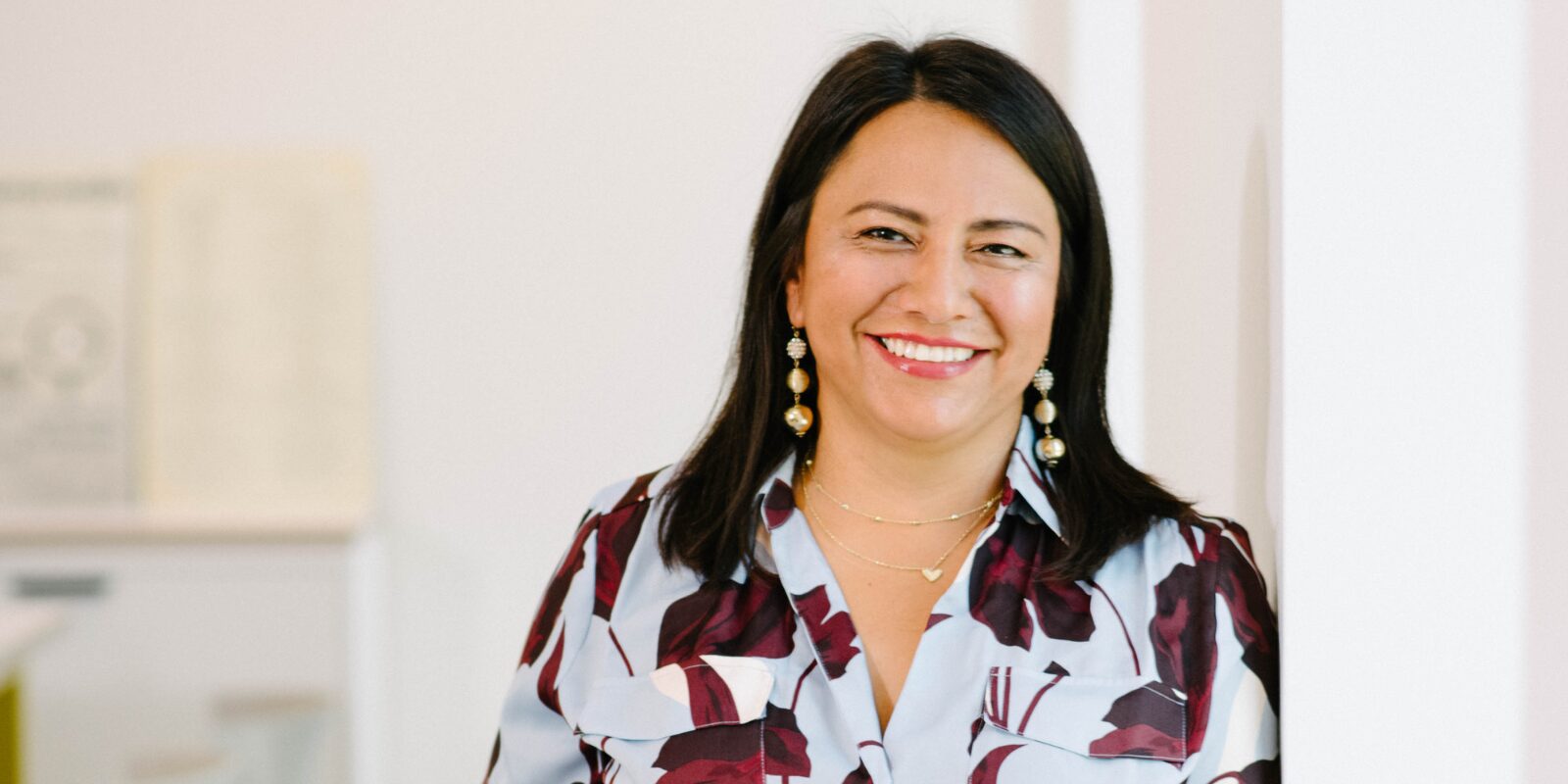
Photo credit: Hillary Schave
Most DEI consultants don't touch your finances. Most financial service providers don't understand your mission at a systemic level. Tania is both. That's not a coincidence. It's the product of a career spent refusing to separate technical excellence from purpose, and a life that taught her there's no time to waste.
I was born in a village of 100 people, so remote it was self-governed. I walked 45 minutes to school starting at four years old. My parents knew we deserved more. At seven, I left everything behind for a city where the air made me sick, where kids bullied me for being from a place they couldn't understand. I made a promise: the sacrifice would not be for nothing.
I became top of my class for eight straight years, carried that drive across borders, earned scholarships, and loaded 18 credits a semester to afford the coursework for my CPA license.
As a young adult, I was on a bus that went over the railing on a winding mountain road. Many passengers didn’t survive. Two things were clear to me at that moment: I had no regrets and I would never take time for granted.
I climbed the ladder. Senior Manager of Internal Controls at a multinational. Compliance Manager at a Credit Union. Public company audit with PwC. Government and Single Audit experience. Financial modeling for utility rate making. Clean energy construction. It was an unusual path for a CPA to cover such a broad range of industries and functions. I was proud of my accomplishments, but was still seeking more.
Joining the Association of Latino Professionals of America cracked something open. I saw how many masks I'd worn to survive in spaces not built for me. I decided to stop.
I didn't want to be a financial professional who happened to be Latina, tucked into the background of some corporate structure. I needed my skills and my purpose to be inseparable.
I grew my DEI practice alongside my financial acumen, not as separate lanes, but as the same work. DEI taught me how to translate complex topics in ways that build understanding, not fear. How to identify where systems create barriers, whether in workplace culture or in a chart of accounts.
Financial systems are not neutral. They reflect the values, assumptions, and blind spots of whoever built them. A chart of accounts can obscure program impact. A budget process can replicate the same power dynamics your DEI strategy is trying to dismantle.
When you separate financial management from equity work, you get one consultant transforming your culture and another reinforcing old structures through your back office. That's not a model. That's a contradiction.
Every week, I meet nonprofit leaders facing challenges at the intersection of money and mission. Even strong organizations become overwhelmed, not because they're mismanaged, but because the systems were never designed for the volume and complexity nonprofits now handle. The risks stack fast: burnout, audit findings, cash flow surprises, friction between programs and finance.
I think often about the self-governance my village practiced. Leaders were chosen for their moral compass. There was no hiding from your impact on the people around you.
That's the standard I bring. Not just accuracy. Integrity. Not just compliance. Alignment with why you exist.
If you're wondering why a DEI firm manages finances, the answer is simple: doing them separately doesn't work. We build financial systems that hold up under pressure so missions can scale without breaking the organization behind the scenes. And we do it with the same equity lens we bring to everything, because your budget isn't separate from your values. It is your values.
Learn more about our approach in our last blog: "Your Mission Deserves Better Systems Behind It"
Your source for impactful stories, practical DEI guidance, and the latest on our journey.

.png)
.png)
.png)